


Copper nanoparticles in agriculture: a precautionary approach is needed
Pesticides containing copper nanoparticles are marketed outside the European Union. Because of the harmful effects of more ‘traditional’ forms of pesticide made with non-nano copper, Europe might in turn be tempted to use these new nano-copper formulations: they contain lower concentratations of copper and lead to reduced environmental contamination, while potentially offering similar—or even improved—performance. However, scientists from INRAE (the French National Institute for Agronomic Research) bring nuance to the picture: after compiling and analyzing more than a hundred academic publications, they call for the utmost caution, in view of the risks that copper nanoparticles pose to the liver, the gut microbiota and, more broadly, the entire digestive system.
A literature review on the risks associated with copper nanoparticles
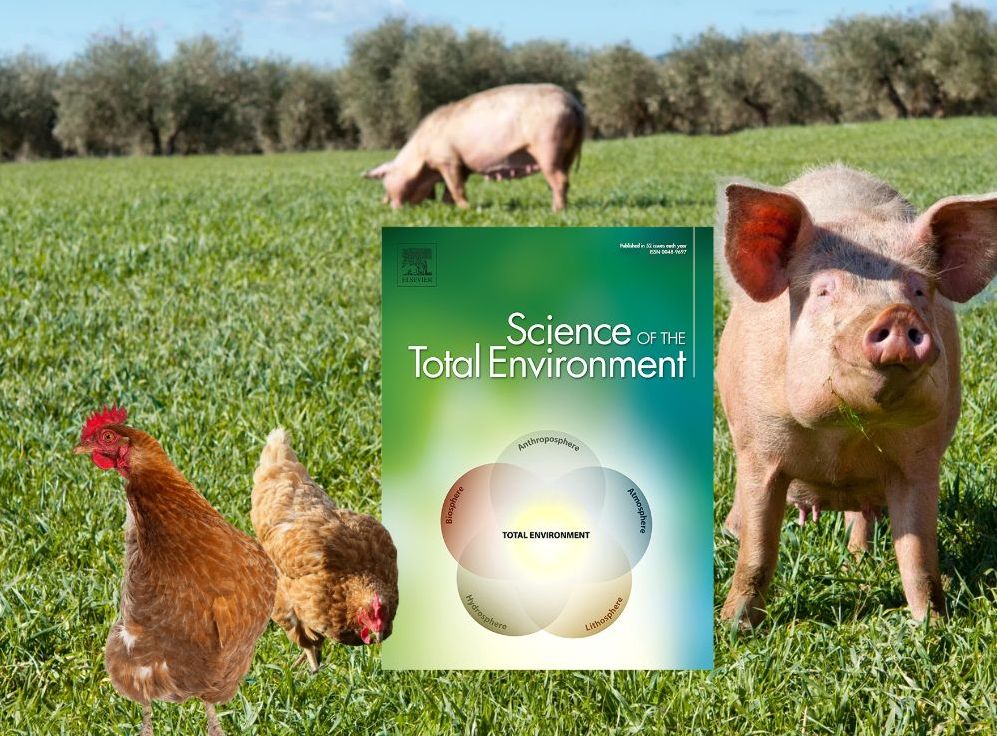
A review of the literature1Copper nanoparticles in agriculture: from expected benefits of reduced copper use to toxicity on gut health, Casale E et al., Science of the Total Environment, 1004, 15 November 2025 conducted by several researchers from the ENTeRisk team at INRAE Toulouse’s ToxAlim laboratory, was published in late October in the journal Science of the Total Environment, under the entite “Copper nanoparticles in agriculture: from expected benefits of reduced copper use to toxicity on gut health”. What are the key points of this dense bibliographical synthesis? Here’s what AVICENN has retained.
Copper concentrations are increasing in our soils
Copper occurs naturally in soil and water, but current concentrations are higher than before, due in part to its growing use across varioys sectors – from plumbing pipes and fittings (to replace lead, which is toxic), to certain kitchen utensils, microelectronics and the agri-food sector.
In agriculture, copper is used intensively mainly for its antimicrobial and antifungal functions in pesticides, as well as a growth promoter in agricultural fertilizers and livestock feed.
All these uses, together with the repeated spreading of copper-rich liquid manure, lead to a persistent accumulation of copper in soils and contamination of the food chain2For example, copper accumulates in the tissues of earthworms (which are then ingested by birds), or in the edible parts of plants such as carrots, peas or salad leaves., ultimately resulting in increased chronic exposure of humans to this metal.
In Europe, vineyard soils have the highest copper concentrations, followed by olive groves and orchards. And France is the European country with the highest average national concentration, with a peak in the soils of the Champagne wine-growing region: the latter, colder and wetter than the Mediterranean region, for example, relies more heavily on copper to protect vines from mildew, whose development is favored by humidity.
Copper in pesticides and animal feed
The use of copper in agriculture is not a new phenomenon. Copper sulfate is one of the key components of Bordeaux mixture, used since the late 19th century to protect vines, orchards and vegetables against fungal and bacterial diseases such as grapevine downy mildew, apple scab and potato blight.
Since then, many other copper-based crop protection products have been developed3developedCopper can be present in the form of oxides, hydroxides, oxychlorides or octanoates. and preventive treatments are the most common practice for protecting crops against future infections.
Copper: an ally… that can quickly become toxic
While copper is an essential trace element for all living organisms4EFSA recommends a dietary intake of between 0.4 and 1.6 mg of copper per day, depending on age and sex, in excess it can cause harmful effects on both health and the environment, due to its deleterious impact on microorganisms.
Although the mechanisms of copper’s actions have not yet been fully elucidated, this metallic substance has an undeniable and powerful antimicrobial effect. And while its ability to destroy micro-organisms – particularly undesirable fungi and bacteria – makes it a real ally in agriculture, this same ability can also prove dangerous for human and animal health. Our gut microbiota is a diversified and complex ecosystem composed mainly of bacteria, but also of viruses, fungi, archaea and protozoa, whose proper balance is crucial to our metabolism, nervous system development, appetite regulation and immune defenses.
Because copper in high doses alters the intestinal barrier, its excess favors not only the development but also the transfer of bacteria or bacterial toxins into the bloodstream, resulting in a risk of systemic inflammation harmful to health.
It is now well established that excessive concentrations of copper can cause various disorders, including:
– in the liver (from mild hepatitis to acute liver failure, cirrhosis)
– in the brain (dystonia, tremors, dysarthria and psychiatric disorders).
Concern over copper-induced liver toxicity has led EFSA to halve the Acceptable Daily Intake (ADI) from 0.15 to 0.07 mg/kg body weight for the adult population in 2023.
The temptation to use copper nanoparticles in the agri-food sector
In recent years, the use of copper nanoparticles, which are smaller and more reactive than the copper particles commonly used in pesticides, has emerged as a promising alternative for reducing the total amount of copper used in the agri-food production. Studies have shown that copper nanoparticles can be particularly effective against various pathogens. Trials on tomato plants, for example, have demonstrated nearly four times greater efficacy against fungal infections tcopared to non-nano copper pesticides.
→ Pesticides and fertilizers containing copper nanoparticles are already being marketed and used outside the European Union.
Tests have shown that nanocopper can increase the biomass of lettuce leaves. This would be interesting… if it weren’t for the concomitant reduction in antioxidants in these same leaves. More lettuce, but less nutritional value… in the end, neither the consumer nor the environment comes out a winner.
But there is a more worrying issue. Data on the fate, bioavailability and long-term impact of copper nanoparticles on the environment and health remain limited, particularly with regard to their novel properties linked to their small size. The few studies assessing these substances have mainly focused on their physicochemical characterization, environmental fate and toxicity in… target organisms. But what about other micro-organisms that are beneficial—and even essential—to the environment and to human beings?
Caution is needed in light of the risks of nano copper
The literature review carried out by ToxAlim scientists shows that the increased efficacy of nano copper compared to ‘conventional’ copper is a double-edged sword. Indeed, nanoparticulate copper tends to be more toxic than larger-sized copper particles. There is therefore every reason to fear that the expected benefits of using nano copper in agriculture may be outweighed by its greater environmental and human toxicities linked to the properties associated with its nano size.
The liver and kidneys were found to accumulate the highest levels of copper – nanoparticles being eliminated more slowly than copper microparticles, resulting in prolonged retention of nano copper in these organs.
Overall, although studies have shown that copper nanoparticles can improve the health and performance of livestock animals such as pigs or poultry (often with better results than conventional sources of copper), the collective in vivo and in vitro observations clearly demonstrates a sgreater toxicity of nano copper.
→ The nanometric size of copper in fact leads to greater solubility and cellular uptake, as well as increased surface reactivity with its direct environment (cells, tissues or organs) compared to larger particles.
Specific impacts of copper nanoparticles include alterations in bacterial composition and balance, reduced production of short-chain fatty acids (SCFAs) by the gut microbiota5SCFAs have anti-inflammatory effects that may help protect against colorectal cancer, intestinal barrier dysfunction, as well as increased accumulation and toxicity of nanoparticles in the liver and kidneys. All of these are concerning not only for farmers, but also for consumers who may ingest meat or offal from these animals (particularly poultry and/or pork livers and kidneys).
This is why, in the authors’ own words, “these effects highlight the critical need for further research into their long-term effects in farm animals, as well as for human consumers. This will enable risks to be assessed at all stages of use before copper nanoparticles become widespread in agricultural and livestock practices.”
What’s next?
In the current context6Cf. EU Commission proposes unlimited pesticide approvals: Science abandoned, industry interests above health and environment, Pesticide Action Network Europe (PAN Europe), 18 November 2025, let’s hope that the message will be heard before it’s too late: while deregulation is gaining ground under pressure from lobbies, climate change favors the spread of powdery mildew and downy mildew, making it all the more urgent to develop solutions that are both rapid… and sustainable.
A year ago, Innovamol’s report recommended adapting European regulations to better identify, assess and manage nanos in the field7Cf. Nanos in agriculture: information still sorely lacking, AVICENN @VeilleNanos, November 2024 and a few months ago, in its opinion on nanoparticles in plant protection products, ANSES recommended “minimizing exposure at source (…) given the high uncertainty about nanoparticle exposure levels and the complexity of risk assessment methodologies, particularly for the environment“8Cf. There are nanos in phytopharmaceuticals… but no regulatory framework for them!, AVICENN @VeilleNanos, April 17, 2025. More recently, on November 18, a petition demanding immediate protection against nanopesticides was launched on Change.org and relayed by the Yvelines Ecologists.
Contacted by AVICENN, agronomist François Warlop, who did not take part in the study, shares the concerns and recommendations of INRAE and ANSES:“
There is plenty of food for thought for researchers and farmers alike… provided they are given the resources to carry out these explorations. The French Office for Biodiversity (OFB) and the evertéa foundation have financially supported the work of INRAE’s ENTeRisk team on copper nanoparticles, which has begun in vitro experiments on mouse intestinal organoids and in vivo experiments on mice. To be continued.
Addition of 9 December: Following the publication of this article, we were contacted regarding the marketing — or not — of nanocopper-based pesticides in the European Union. According to the INRAE article, this is not the case — and we had also understood, on our side, that no authorization for such nanocopper-based pesticides had been granted so far in the EU. So what about the submicronic copper particles, especially those smaller than 100 nm, detected by the LNE in certain pesticides during the tests that this laboratory carried out for the national health safety agency11Cf. Opinion on the “analysis of the results of an exploratory study to measure the presence of nanoparticles in plant protection products and biocidal products and to propose, where appropriate, management measures to protect potentially exposed populations and the environment”, Anses, 2025 (page 8)? We have requested input from experts at these various organizations and will keep you informed of any responses we receive.




Next nano events


- International conference on metallic nano-objects for experts working in the interdisciplinary field of metallic nanoparticles, with a particular emphasis on nanoparticle synthesis and characterization, plasmonics, optics and photonics, catalysis, biomedicine, electronics, and nanoparticle recycling
- Organizers / Partners: CNRS, Bordeaux University, Bordeaux INP, ICMCB, CRPP, CBMN, ISM
- Website: https://mno2026.sciencesconf.org

- Seminar presenting the Seirich system for chemical risk assessment, with a focus on the specificities of nanomaterials.
- Organizers: Association NanoMesureFrance
- Speakers: Florian Marc (INRS)
- Website: www.eventbrite.fr/e/billets-nanomesurefrance-webinar-1984136502691
- Toxicokinetics: the fate of chemicals in the body” training course:
- the different routes of entry for toxic products
- the importance of toxicokinetics in preventing substance toxicity,
- xenobiotic absorption, distribution, metabolism and elimination
- nanoparticle toxicity
- Organizer: Association Toxicologie Chimie (ATC)
- Date: March 26, 2026
- Speaker: Nicole Proust (Research Engineer, CNRS Honorary Research Director, Palaiseau)
- Website: www.atctoxicologie.fr/…
Notes and references
- 1Copper nanoparticles in agriculture: from expected benefits of reduced copper use to toxicity on gut health, Casale E et al., Science of the Total Environment, 1004, 15 November 2025
- 2For example, copper accumulates in the tissues of earthworms (which are then ingested by birds), or in the edible parts of plants such as carrots, peas or salad leaves.
- 3developedCopper can be present in the form of oxides, hydroxides, oxychlorides or octanoates.
- 4EFSA recommends a dietary intake of between 0.4 and 1.6 mg of copper per day, depending on age and sex
- 5
- 6Cf. EU Commission proposes unlimited pesticide approvals: Science abandoned, industry interests above health and environment, Pesticide Action Network Europe (PAN Europe), 18 November 2025
- 7Cf. Nanos in agriculture: information still sorely lacking, AVICENN @VeilleNanos, November 2024
- 8Cf. There are nanos in phytopharmaceuticals… but no regulatory framework for them!, AVICENN @VeilleNanos, April 17, 2025
- 9While copper plays an important role in conventional agriculture, it is particularly essential in organic farming, where it is one of the few chemical products authorized with a significant biocidal effect.
- 10See, for example, the report Peut-on se passer du cuivre en protection des cultures biologiques, Didier Andrivon, Isabelle Savini, Editions QUAE, 2019
- 11